MIMRYLO™ (rusfertide) reduced phlebotomies, maintained HCT control below 45%, and reduced fatigue1

MIMRYLO was studied in VERIFY, the largest pivotal trial in PV1-3
VERIFY trial baseline characteristics
Baseline characteristics
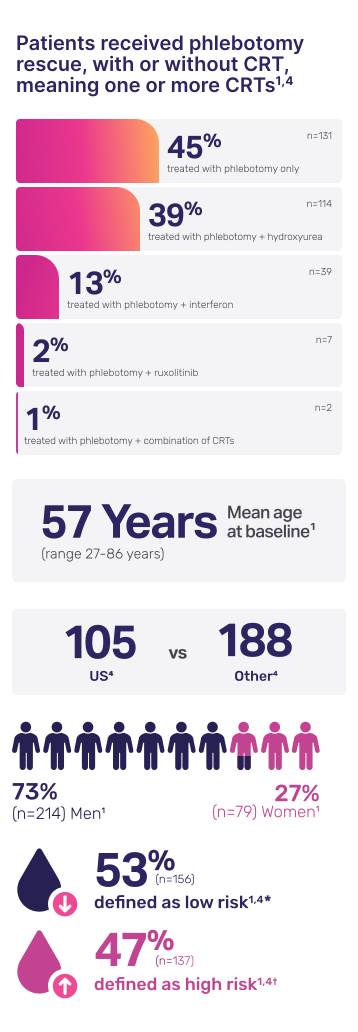
- Adults (≥18 years of age) who met the revised 2016 World Health Organization criteria for the diagnosis of PV
- Had phlebotomy-dependent disease due to inadequate HCT control (defined as ≥3 phlebotomies within 28 weeks or ≥5 within 1 year required prior to randomization)
- HCT <45% immediately before randomization
†High risk is defined as age greater than or equal to 60 years, and/or a history of previous TE(s).1
More patients taking MIMRYLO maintained HCT levels without requiring phlebotomies vs the control arm
Proportion of patients achieving phlebotomy ineligibility response from Weeks 20-321
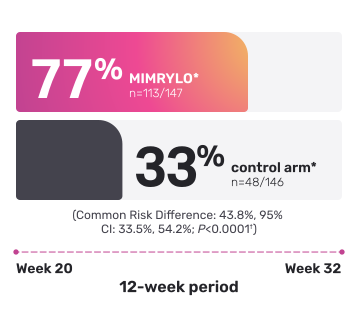
†P-value is obtained from the Cochran-Mantel-Haenszel test stratifying by ongoing therapy.1
MIMRYLO met key secondary endpoints
MIMRYLO was proven to:
Reduce the need for rescue phlebotomies
Mean number of phlebotomies (Baseline-Week 32)
MIMRYLO was proven to reduce the need for rescue phlebotomies
Patients had significantly fewer phlebotomies with MIMRYLO compared to the control arm1
Mean number of phlebotomies1
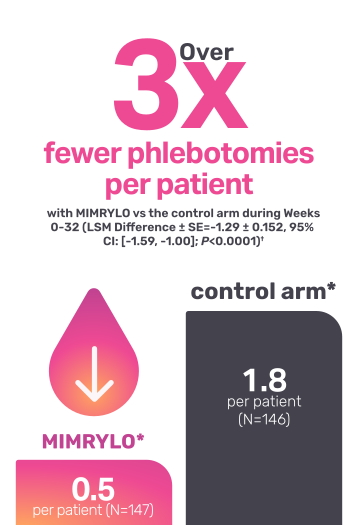
†LSMs, 95% CI, and p-value are obtained from ANCOVA model adjusted for pre-treatment number of phlebotomies, treatment, and stratification variable (ongoing therapy).1
Keep HCT below 45%
Proportion of patients who had HCT values <45% (Weeks 0-32)
MIMRYLO was proven to keep HCT below 45%
A significantly larger proportion of patients on MIMRYLO maintained HCT below 45% compared to the control arm1
Proportion of patients maintaining HCT values <45%1*
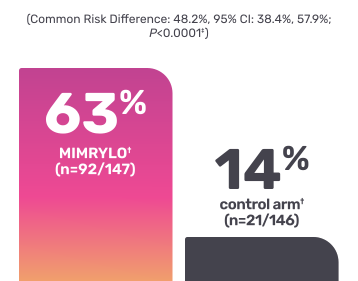
†Both arms of the trial were studied with phlebotomy rescue, with or without CRT (hydroxyurea, interferon, ruxolitinib).1
‡P-value is obtained from the Cochran-Mantel-Haenszel test stratifying by ongoing therapy.1
Reduce fatigue
Change in fatigue score based on PROMIS Short Form 8a (Baseline-Week 32)
MIMRYLO was proven to reduce fatigue
Patients taking MIMRYLO saw a statistically significant improvement in fatigue vs the control arm1
LSM Difference from baseline total fatigue score1
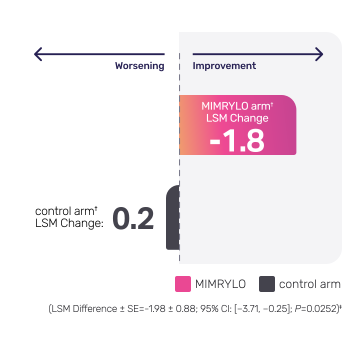
At Week 32 of the double-blind portion of the trial, measured by the PROMIS Fatigue Short Form 8a T-score*:
Patients taking MIMRYLO reported meaningful within-person improvement in fatigue vs the control arm4
Proportion of patients with meaningful within-person change4
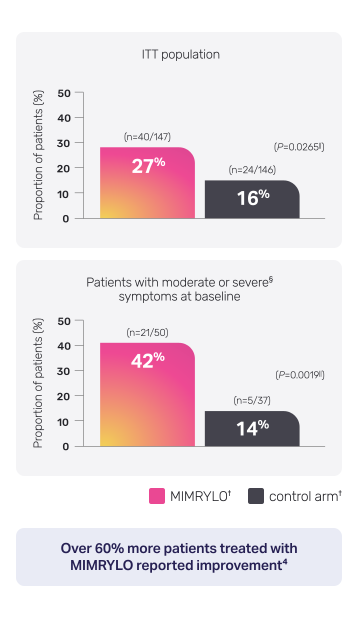
VERIFY was not designed to detect a statistically significant difference between arms for within-person change in PROMIS Fatigue Short Form 8a PROs.4
In the pivotal trial, fatigue was assessed as a key secondary endpoint using the PROMIS T-score, a validated PRO measure. PROMIS Fatigue scores reflect the severity and impact of fatigue from the patient's perspective. PROMIS Fatigue Short Form 8a assesses fatigue severity over the prior 7 days using patient-reported ratings that are converted to a standardized T-score (mean=50, SD=10); lower scores indicate less fatigue. Values shown represent an LSM change from baseline.1,4,5
*For the PROMIS T-score, Week 32 change from baseline is available for 120 patients in the MIMRYLO arm and 115 patients in the control arm.1
†Both arms of the trial were studied with phlebotomy rescue, with or without CRT (hydroxyurea, interferon, ruxolitnib).1
‡LSMs, 95% CI, and p-value are obtained from MMRM model adjusted for baseline, treatment, visit, treatment by visit interaction, baseline by visit interaction, and stratification variable (ongoing therapy).1
§For the PROMIS Fatigue Short Form 8a, patients with a T-score ≥58.8 based on the severity cutoff were classified as having moderate or severe symptoms at baseline.4
∥P-value is obtained from the Cochran-Mantel-Haenszel test stratifying by ongoing therapy.4
MIMRYLO delivered sustained HCT control <45% up to Week 52
HCT levels over 52 weeks4
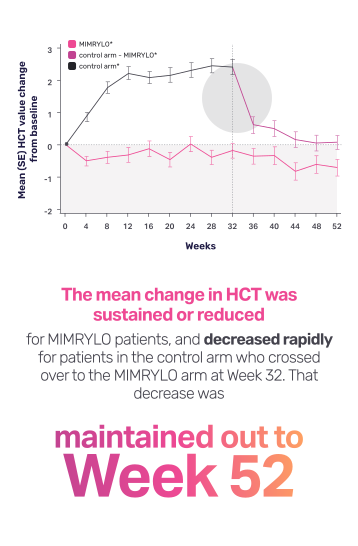
Patients receiving MIMRYLO demonstrated sustained or reduced HCT levels from baseline during Weeks 0-324
Patients who switched from the control arm to MIMRYLO showed reduced HCT levels within 4 weeks of the first dose4
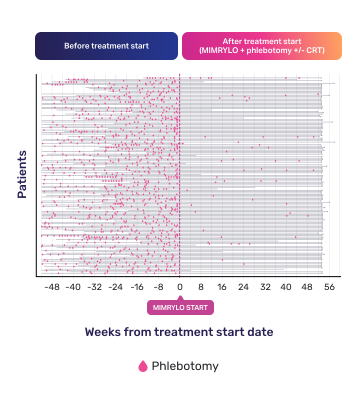
Individual phlebotomy results out to Week 52
MIMRYLO reduced the need for rescue phlebotomies
Individual patient phlebotomy results over 52 weeks in the MIMRYLO arm4*
Individual patient phlebotomy results over 52 weeks in the control arm4*
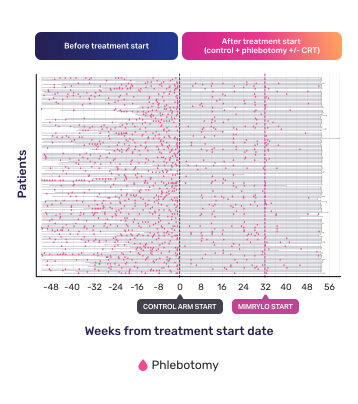
Each row represents an individual patient. Unique markers indicate rescue phlebotomies.
At Week 32, patients in the control arm entered the open-label extension with MIMRYLO.1
This trial was not powered to show a statistically significant difference in response vs the control arm as measured by reduction in phlebotomy burden.4
*Both arms of the trial were studied with phlebotomy rescue, with or without CRT (hydroxyurea, interferon, ruxolitinib).1
MIMRYLO helped patients with low ferritin achieve normal levels over time
Ferritin levels over 52 weeks4