MIMRYLO™ (rusfertide) has a favorable safety profile as seen in the largest pivotal trial in PV1-3


The safety of MIMRYLO was assessed in 285 adult patients in the VERIFY trial1
Duration of exposure in the VERIFY trial1,4:
- 87% of patients were exposed for ≥28 weeks
- 65% of patients were exposed ≥52 weeks
The safety of MIMRYLO was studied both alone and in combination with CRTs.1,4-6
The most common (>15%) adverse reactions were injection site reactions (56%), and anemia (16%).1
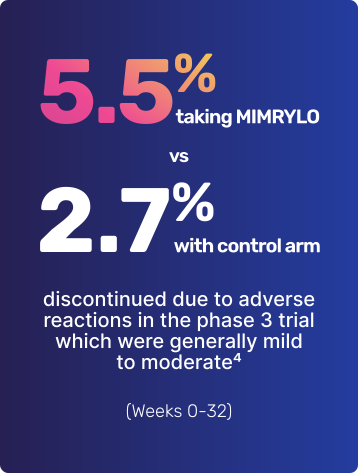
In the VERIFY trial, most adverse reactions observed with MIMRYLO (Weeks 0-32) were low grade and did not lead to treatment discontinuation1,4
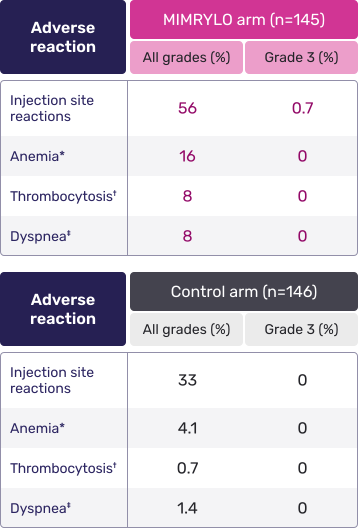
*Includes anemia and hemoglobin decreased.1
†Includes thrombocytosis and platelet count increased.1
‡Includes dyspnea and dyspnea exertional.1
Serious adverse reactions and discontinuations
In the safety population of 285 patients, a serious adverse reaction of anemia occurred in one (0.4%) patient who received MIMRYLO. Five patients discontinued MIMRYLO due to adverse reactions: two (0.7%) due to injection site reactions, two (0.7%) due to thrombocytosis, and one (0.4%) due to anemia.1
Across the whole trial (Weeks 0-52), the majority of common adverse reactions were mild to moderate1,4
Additional safety information in the VERIFY trial
There was no evidence of increased cancer risk in patients treated with MIMRYLO (Weeks 0-32) compared with the control arm (2.1% vs 5.5%). For the MIMRYLO patients who stayed on treatment through Week 52, the rate was 3.0%.4