
Introducing MIMRYLO™ (rusfertide): The first hepcidin mimetic to treat erythrocytosis in polycythemia vera (PV)1,2

PV is characterized by erythrocytosis, causing iron dysregulation through hepcidin suppression2-4
Iron dysregulation and erythrocytosis in PV
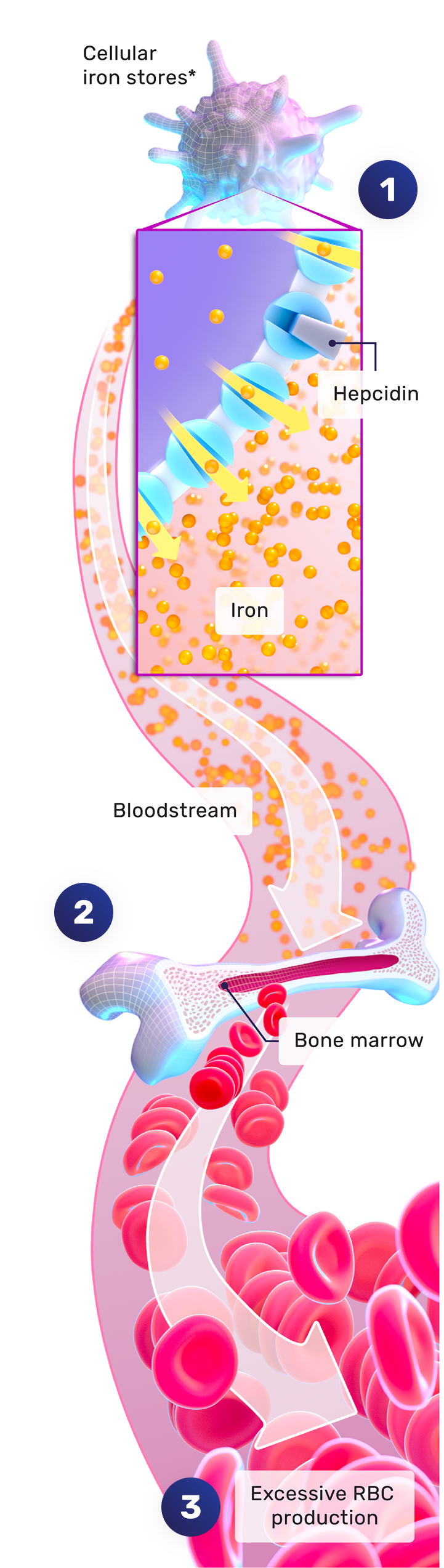
PV is characterized by erythrocytosis—the overproduction of RBCs in the bone marrow.2-4
In people with PV, persistent erythrocytosis suppresses hepcidin, the body's regulator of iron homeostasis.2
Step 1: Hepcidin suppression causes uncontrolled iron release from iron stores2*
Step 2: Unrestricted iron availability to the bone marrow fuels further erythrocytosis2-4
Step 3: As excess RBCs enter the bloodstream, HCT rises above the clinically established threshold of 45% for PV management5,6
In people with PV, persistent erythrocytosis suppresses hepcidin, the body's regulator of iron homeostasis.2
Step 1: Hepcidin suppression causes uncontrolled iron release from iron stores2*
Step 2: Unrestricted iron availability to the bone marrow fuels further erythrocytosis2-4
Step 3: As excess RBCs enter the bloodstream, HCT rises above the clinically established threshold of 45% for PV management5,6
*Iron stores include: macrophages within the spleen and liver, hepatocytes (liver cells), and enterocytes (intestinal cells).2
MIMRYLO is the first hepcidin mimetic for PV, designed to deliver HCT control through targeted iron regulation1,2
MIMRYLO mechanism of action
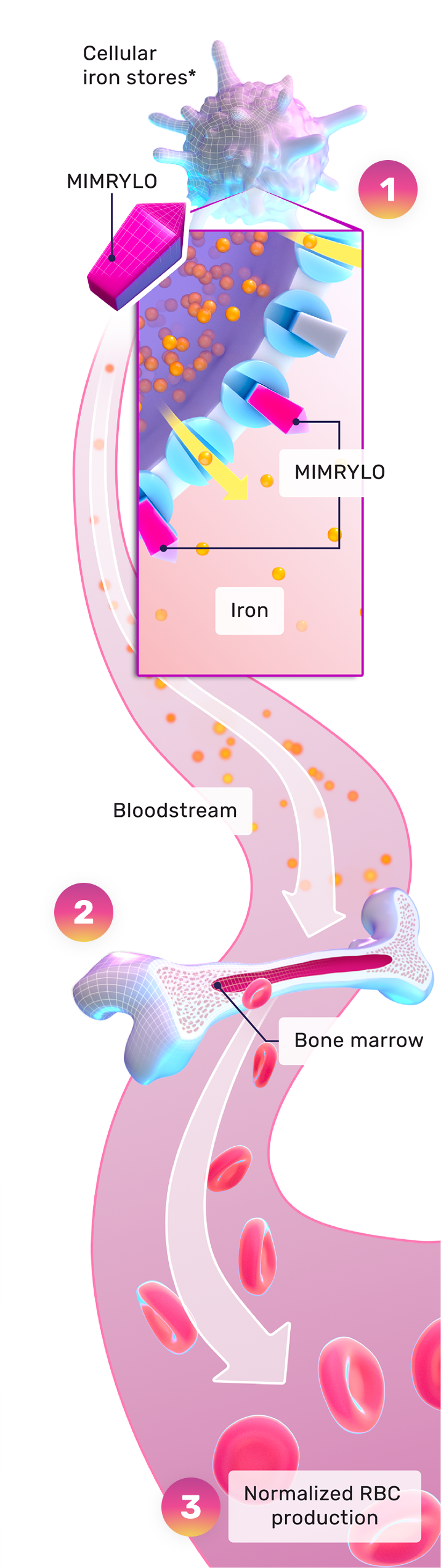
Step 1: MIMRYLO, a hepcidin mimetic, targets iron regulation and limits release of iron from iron stores1,7*
Step 2: This limits iron availability to the bone marrow1,4
Step 3: As a result, RBC production is normalized which is reflected in HCT counts1,7
Step 2: This limits iron availability to the bone marrow1,4
Step 3: As a result, RBC production is normalized which is reflected in HCT counts1,7
*Iron stores include: macrophages within the spleen and liver, hepatocytes (liver cells), and enterocytes (intestinal cells).2